
What You Will Learn
After reading this note, you should be able to...
- This content is not available yet.
Read More 🍪

Note Summary

This content is not available yet.
closeClick here to read a summary
DEFINITION
- ABNORMAL protrusion of an organ/tissue through a DEFECT in its surrounding walls
ANATOMY
- The surrounding walls of the peritoneal cavity include:
- The diaphragm
- The anterior abdominal wall musculature
- The posterior abdominal wall musculature
- The pelvic diaphragm
- Most of these surrounding muscles have parietal peritoneum as an inner lining
.jpg)
Anatomy of the anterior abdominal wall
×
![]()
Anatomy of the anterior abdominal wall
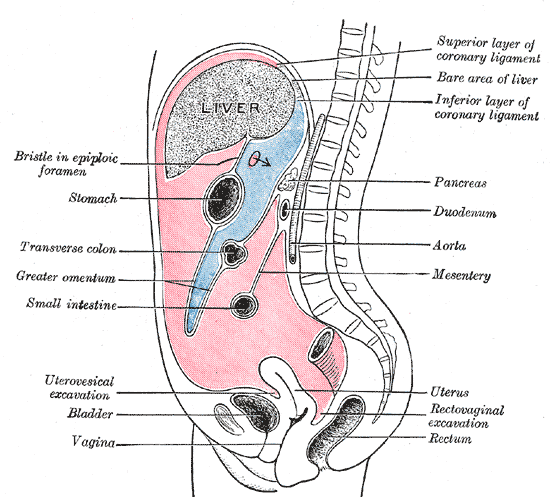
LONGTITUDINAL SECTION THROUGH THE ABDOMEN showing parietal peritonuem lining the Diaphragm/ Anterior abdominal wall/Posterior abdominal wall/ Pelvic diaphragm
×
![]()
LONGTITUDINAL SECTION THROUGH THE ABDOMEN showing parietal peritonuem lining the Diaphragm/ Anterior abdominal wall/Posterior abdominal wall/ Pelvic diaphragm
.jpg)
Examples of Anterior Wall Hernia
×
![]()
Examples of Anterior Wall Hernia
- COVERING
- SAC-
- Neck
- Body
- Fundus
- CONTENT
- Small/large bowel
- Omentum
- Fluid
.jpg)
Inguinoscrotal swelling
×
![]()
Inguinoscrotal swelling
.jpg)
Reduced Hernia
×
![]()
Reduced Hernia
- Congenital
- Raised intra-abdominal pressure
- Chronic cough
- Obstructive uropathy
- Constipation
EXTERNAL
- Protrudes through all layers of the abdominal wall
- Defect could be congenital or spontaneous/acquired
- Visible protrusion on inspection
- Cough impulse is positive
- Can be reduced into the peritoneal cavity when uncomplicated
- Groin / Ventral
INTERNAL
- Protrudes through an abnormal defect inside the peritoneal cavity
- Defect may be congenital or acquired (post-op, post-inflammatory)
- Not visible
- Presents with intestinal obstruction
Presentation of External Hernia
- Reducible
- Content easily returns into the peritoneal cavity
- Complicated
- Irreducible
- Obstructed
- Strangulated
Groin Hernia
Inguinal Hernia
- Congenital or spontaneous/acquired
- Congenital - incomplete obliteration of processus vaginalis
- Protrudes through the inguinal canal
- Located above and medial to the pubic tubercle
- Direct/Indirect
- Descends into the scrotum
- More common in males
Femoral Hernia
- Acquired
- Protrudes through the femoral canal
- More common in females
- Protrusion is below and lateral to the pubic tubercle
- Incidence of strangulation is high
Ventral Hernia
- Through the layers of anterior abdominal wall
- Spontaneous/Incisional
- Spontaneous - epigastric, umbilical, hypogastric
- Incisional - Post-operative
Rare Hernia
- Sliding
- Lumbar
- Interparietal
- Obturator
- Sphingelian
- Richters
- Mass/Protrusion at the site
- Positive visible and palpable cough impulse
- Reducible except complicated
- Groin Hernia
- Cannot get above groin mass
- Testicle palpable separate from inguinal hernia mass in scrotum
- Basic
- PCV
- Urinalysis
- Genotype
- Others
- Ultrasonography
- Plain X-ray
- CT
- Inguinal
- Modified Bassini
- Shouldice
- McVay
- Laparoscopic
- Femoral
- Lockwood
- Lothesian
- Laparoscopic
- Prosthetic/Mesh Repair
- Open
- Laparoscopic
- Irreducibility
- Obstruction
- Strangulation
- Recurrence
.jpg)
Uncomplicated umblical hernia lying supine
×
![]()
Uncomplicated umblical hernia lying supine
.jpg)
Uncomplicated umblical hernia with positive cough impulse
×
![]()
Uncomplicated umblical hernia with positive cough impulse
.jpg)
Strangulated umblical hernia
×
![]()
Strangulated umblical hernia

Practice Questions
Check how well you grasp the concepts by answering the following questions...
- This content is not available yet.
Read More 🍪
Contributors

Jane Smith
She is not a real contributor.


John Doe
He is not a real contributor.

Send your comments, corrections, explanations/clarifications and requests/suggestions